Bunk Rooms That Don't Feel Like a Hostel: Sleeping Furniture for Mixed-Age Lodge Groups
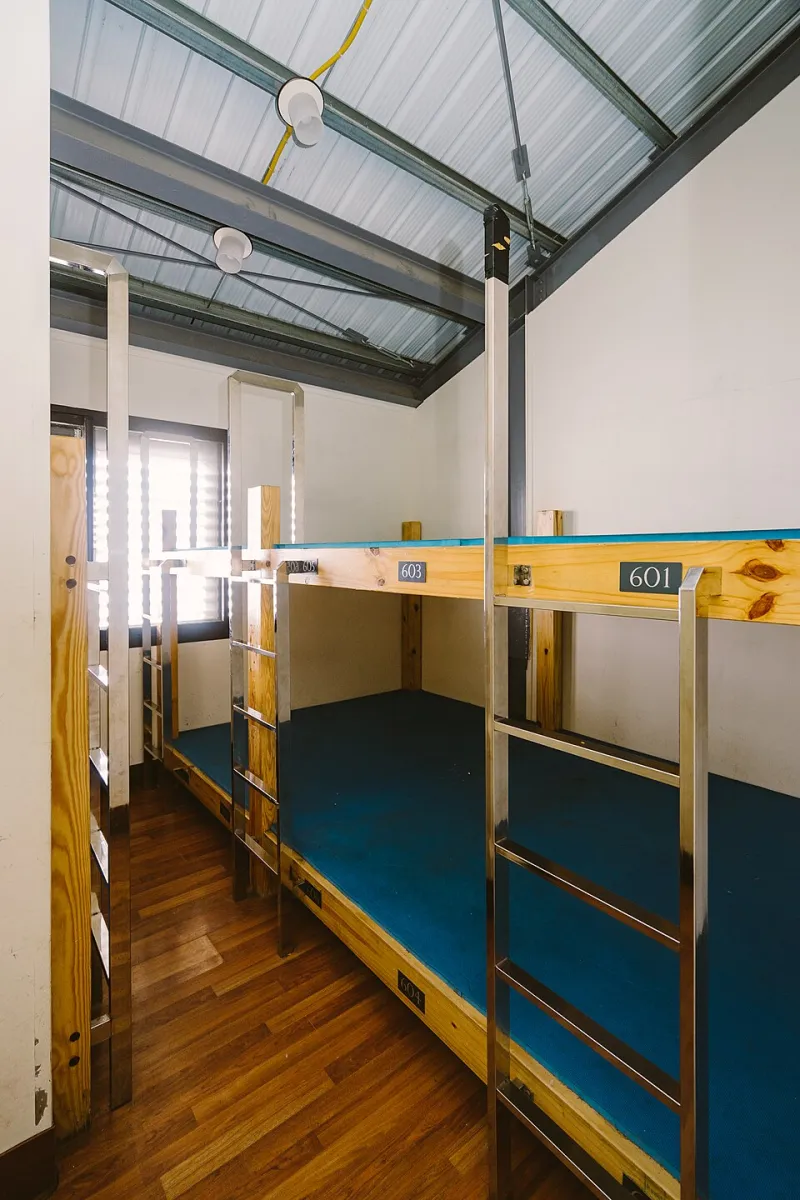
Photo: Wei-Te Wong, CC BY-SA 2.0, via Wikimedia Commons
Ask a lodge owner what fills their calendar and the answer is rarely a group of friends. It is a family: two parents, two or three children, and a set of grandparents who booked the trip so they could actually see everyone. That booking is worth more than a weekend of couples, and it lives or dies on one room — the one with the bunks.
Get it right and the children fight over who sleeps where. Get it wrong and you have a room that photographs badly, creaks in the night, and leaves the grandparents quietly wishing they had booked a hotel.
Why bunk rooms get a reputation
The hostel association comes from a few very specific things: metal frames that flex, mattresses the thickness of a bath mat, no reading light, no shelf, and a ladder bolted to the end of the bed with the treads too narrow for anyone over the age of nine. None of that is inevitable. It is just cheap.
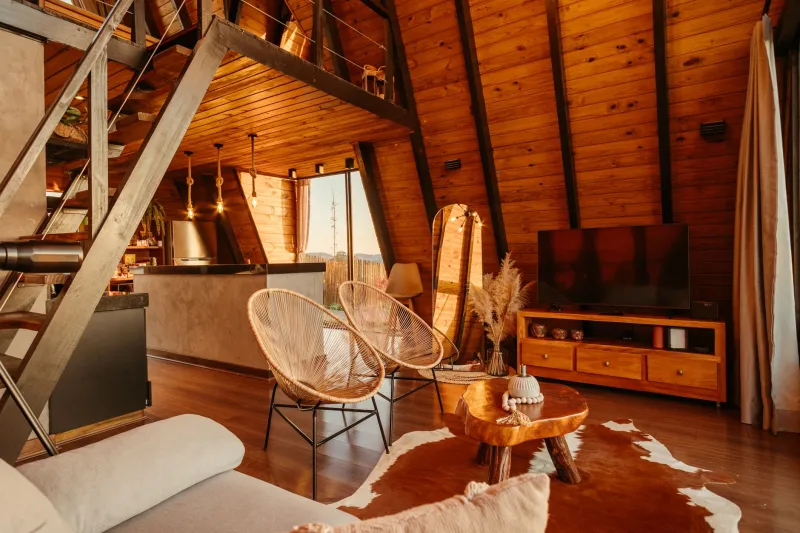
A well-planned bunk room reads as a proper bedroom that happens to stack. It has warm wood, decent linen, a lamp at every level and somewhere to put a book down. The stacking is a detail, not a personality.
Who actually sleeps on the top bunk
This is the question that decides the whole plan. In most mixed-age groups, the top bunk belongs to a child of roughly six and up — old enough to climb safely, not so old that they resent it. Grandparents will almost always take a low bed, and quite right too.
That means the bottom bunk has to be genuinely comfortable for an adult, because it will be used by one. Look for a bottom berth with a proper adult-length mattress and enough headroom to sit up. If the frame allows it, a bottom bunk that converts to a small double gives you a room that can host a couple when the children stay home.
Safety rails and the details that matter
A few things are worth insisting on rather than hoping for.
- Full-length guard rails on the top bunk, not a token bar at the head end. They should be fixed, not clipped on loosely.
- A gap of no more than 75mm between the mattress and the rail. Children slip through bigger gaps.
- Wide, flat treads on the ladder with a proper handhold. A 60mm round rung is not a step.
- No sharp corners at adult knee height. Bottom bunks are the most-knocked furniture in the building.
- Wall fixings. Every bunk, every time. A bunk that tips is a serious incident, not a maintenance note.
- A night light on the route from the top bunk to the door.
Mattress thickness is not a detail
Bunk mattresses are usually thinner than standard ones — partly because of the rail height requirement, partly because the frames are shallower. The practical minimum for a let is around 15–16cm, and you want a firm, breathable filling rather than a soft foam slab. Guests will notice a thin mattress far more than they will notice a nice frame.
Check that the mattress you buy is actually specified for bunk use. Standard mattresses can sit too high and compromise the guard rail, and they wear badly when climbed on from the side.
Stairs that earn their keep
A ladder is fine for a playroom. In a let, consider the staircase option: a short set of solid steps with three or four treads, often with drawers or open shelves built in beneath. They are safer for children, far easier for a tired adult at 6am, and they give you storage in the room you most need it.
If space is tight, a stair unit that doubles as a shelf for books and a night light is one of the best-value pieces of furniture you can put in a lodge. It costs a little more than a ladder. It solves two problems.
Layouts for a room doing three jobs
In most lodges the bunk room is also the spare room, the drying room, the toy store and the place where the dog sleeps. Plan for that rather than fighting it.
The L-shape. Two bunks at right angles along two walls leave a clear central floor and a surprising amount of play space. Good for narrower rooms.
Bunks plus a single. A three-bed room with a freestanding single against the opposite wall flexes from two guests to four without changing the bunk configuration.
Bunks plus a trundle. A trundle that pulls out from under the bottom bunk turns a two-person room into a three-person room for a weekend, then disappears. Choose one with proper castors and a mattress that matches the bunk, not a roll-up foam mat.
Leave at least 700mm between the bunk and any opposite furniture, and keep a metre clear at the foot of the ladder or stairs. Hang hooks at two heights — one for adults, one for children — and put a shelf within reach of the top bunk. Small things, but they are what stops clothes ending up on the floor.
The buying checklist
Before you order:
- Measure ceiling height and confirm the top bunk leaves safe climbing clearance.
- Check the mattress depth the frame is rated for, and buy to it.
- Confirm the frame is solid timber rather than hollow board, especially at the joints.
- Ask how the bunk fixes to the wall, and budget for the fitting.
- Choose a finish that hides the odd scuff — painted MDF looks tired quickly in a let.
- Buy two of every lamp and two of every shelf. Symmetry reads as considered.
- Order a spare mattress topper or two. It is the cheapest upgrade in the building.
A bunk room does not have to be the room you apologise for. Give it proper beds, proper light and a staircase that holds the towels, and it becomes the room the children ask for by name — which, on a three-generation booking, is exactly what brings the whole party back next year.