Heft Over Hype: Why Your Lodge Furniture Needs a Bit More Ballast
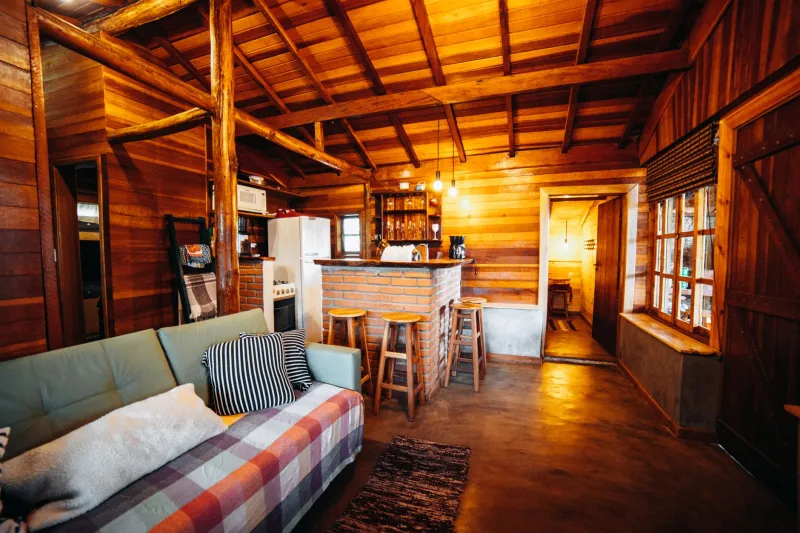
There's a moment every lodge owner knows. It's Sunday afternoon in November, the rain has been horizontal since Friday, and a family of six is trying to leave at once. Wellies are being pulled off by the door, a wet dog is shaking itself dry on the rug, and someone has just dragged the dining bench two feet across the floor because it kept sliding every time they stood up. That bench looked lovely in the showroom. Right now, it looks like a liability.
This is the winter weight test. Not a laboratory measurement, just the annual reality of British holiday lets between October and March. Furniture that felt light and airy in July starts to feel flimsy by December. The fix isn't complicated, but it does require a shift in how we buy: stop asking whether a piece looks good in a photograph and start asking whether it can take a genuine pounding.
Light furniture isn't always the bargain it seems
A lightweight chair is easy to move, easy to ship and easy on the eye. It's also easy to tip, easy to drag and easy to damage. In a lodge, guests don't lift things; they shove them. They push back from the table with both feet, haul the sofa closer to the fire, and slide the coffee table out of the way with one hand while carrying a mug in the other. Every one of those actions puts stress on joints, feet and frames.
Cheap hollow-board furniture tends to swell at the first sign of damp, especially near doors and boot rooms. Veneers lift, corners soften, and suddenly the drawer that slid beautifully in June needs a shoulder to close it in January. Heavier pieces—solid timber, dense composite cores, proper metal fixings—resist that cycle. They don't solve condensation or a leaky boot rack, but they don't make the problem worse either.
Heft is not the same as bulk. A well-made oak chair can be heavy without being clunky. A sofa can feel substantial without looking like a Chesterfield from a stately home. What you're buying is density, stability and a base that stays put when a wet Labrador leans against it.
The three weights that actually matter
When I talk about heavier furniture, I mean three things. First, frame density: a kiln-dried hardwood frame or a properly engineered composite will weigh more than a softwood offcut stapled together, and it will hold its shape through years of changeovers. Second, base stability: wide feet, felt glides, and a low centre of gravity stop pieces from skating across hard floors or sinking into rugs. Third, material heft: tightly woven upholstery, dense foam, solid drawer boxes. These are the parts that take the muddy handprints and the damp coats and still clean up.
None of this is about luxury for its own sake. It's about the operational reality of a holiday let. Every wobbly chair is a maintenance ticket. Every sofa that slides is a guest review waiting to happen. Every chest of drawers that tips when a child pulls it open is a safety incident you don't want to think about.
Room-by-room: what to look for before you buy
Sofas and armchairs
Lift one corner. If the whole piece flexes like a cardboard box, walk away. Look for a frame described as kiln-dried hardwood or at least a substantial engineered frame, not just 'wooden frame'. High-resilience foam seats hold their shape better than cheap crumb foam, and they don't compress into a hammock by February. Removable, washable covers are worth their weight in gold when a wet dog claims the corner seat. Avoid legs that are thin and tapered; they look elegant but concentrate all the weight on a tiny point and are the first thing to snap. Wide, splayed legs or a solid plinth are more stable on uneven lodge floors.
Dining chairs and benches
A dining chair should feel heavier than it looks. Solid timber legs, proper joinery, and a seat that doesn't flex when you stand up. Stackable chairs have their place, but the lightweight ones often have thin metal or plastic frames that skid on laminate. If you need stackability, look for a version with weighted feet or rubber glides. Benches are brilliant for space, but only if they're heavy enough to stay put; a hollow bench is a see-saw waiting to happen. Check the weight per chair—anything under about five kilos is likely to be a slider.
Beds
A bed that shifts when a guest sits on the edge is a bad night's sleep waiting to happen. Divan bases are heavy but stable; wooden frames need solid joints and a proper centre rail. Headboards should be fixed to the wall or the frame, not resting loosely. If you use bed legs, make sure they have wide feet and aren't just dowels pushed into a soft frame. And anchor any tall wardrobe or chest of drawers to the wall—that's not about weight, it's about safety, but the two go hand in hand.
Storage
A heavy chest of drawers is harder to tip and easier to open when the runners are full of grit and dog hair. Look for solid drawer boxes, metal runners, and a plinth or wide feet rather than skinny legs. Blanket boxes and boot benches near the door should be heavy enough to sit on without wobbling, because guests will sit on them. If it's going in a boot room, consider a water-resistant finish and a base that doesn't soak up puddles.
Heavy doesn't mean immovable
There's a balance. You still need to move furniture for changeovers, and a two-person lift should be enough for most pieces. The goal is furniture that stays where it's put during a stay but can be shifted when you need to hoover underneath it. Avoid the temptation to overcorrect into cast-iron pub tables and oak church pews. A lodge still needs to feel relaxed, not like a medieval hall.
The winter weight test is really a simple set of questions. Does it slide when pushed? Does it flex when lifted? Does it tip when leaned on? Does it wipe clean after a wet coat has been dropped on it? If the answer to any of those is yes, it's not the right piece for a UK lodge in the colder months.
Buy for the worst week of the year, not the best photograph in the brochure. A bit of ballast is the quiet difference between a lodge that feels cosy and one that feels like it's falling apart. And when the rain is coming in sideways and the dog has found the only dry spot on the sofa, you'll be glad you chose the heavier option.