Rain-Ready Relaxing: Furnishing a Lodge Veranda Without Babysitting It
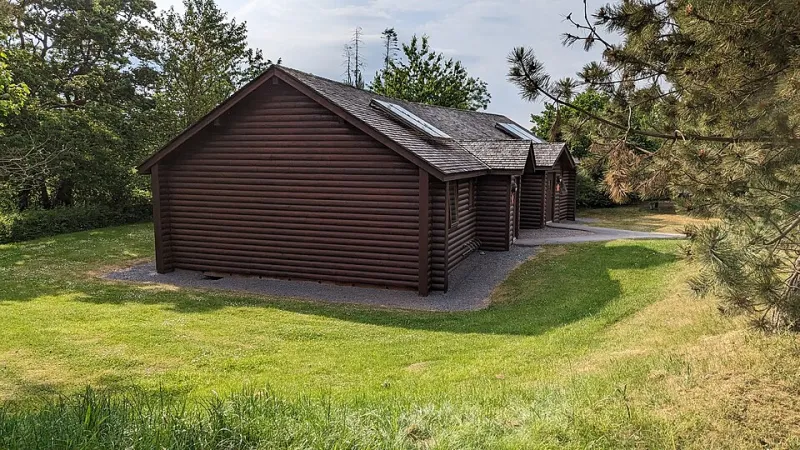
Photo: TCExplorer , CC BY-SA 2.0, via Wikimedia Commons
Most lodge decks start life as a nice idea and end up as a place where one plastic chair lives alone, waiting for better weather. That is a waste. On a UK holiday let, the veranda or deck is often the first thing guests see when they open the sliding door, and the last place they sit with a mug of tea before bed. It deserves the same planning as the lounge, just with more attention to rain, wind and leaf litter.
Start at the doorway, not the furniture catalogue
Before you buy anything, stand at the sliding door and watch how people actually move. They come out with a tray, a dog on a lead, a hot tub towel, a glass of wine and possibly all four at once. Leave a clear walking route through the deck. A bulky dining set placed straight outside the door looks generous in a photograph and feels like an obstacle course in real life.
Measure the usable space, then subtract a sensible margin. On a compact veranda, a narrow bistro table and two stacking chairs will get used far more than a six-seat set that leaves no room to pass. If the deck wraps around the lodge, treat it as two or three small zones rather than one long runway: a coffee spot, a hot tub towel perch, a sunny breakfast corner. Small groupings feel intentional. One giant arrangement feels like a furniture showroom that lost its way.
Materials that can take a British summer
The UK weather does not do gentle. It does damp mornings, sudden gusts, warm afternoons, cold nights and a lot of airborne moisture. For lodge decks, look for frames that are genuinely outdoor-rated rather than merely outdoor-styled.
Powder-coated aluminium is light, rust-resistant and easy to move when the forecast turns. Teak, acacia and eucalyptus are classic choices, but check that fixings are stainless steel rather than mild steel that will bleed rust onto the decking. HDPE rattan is practical for holiday lets because it shrugs off rain and wipes clean, though cheaper woven effects can loosen over time. Avoid anything with hidden steel legs or a chipboard core dressed up in outdoor fabric.
Cushions are where many deck plans fall apart. Choose quick-dry foam and removable covers that can be washed. If cushions stay outside, they need somewhere genuinely waterproof to live, not a decorative box with a loose lid. Textilene sling seats are less inviting on a cold morning but brilliant for wet climates and high-turnover lets.
Shapes that fold, stack and tuck away
On a lodge deck, flexibility beats grandeur. Stacking chairs, folding bistro tables, nest tables and benches with storage underneath all earn their place because they can be rearranged for two people or six without becoming permanent clutter.
A bench is particularly useful on a veranda: it seats several people, takes up less depth than a sofa and can double as a place to put towels or wellies. Look for one with a lift-up lid if you need cushion storage, but make sure the interior is lined or ventilated so damp does not turn into mildew. Folding chairs are handy for overflow, though they are rarely comfortable enough for a long evening. Keep two good chairs and two folding spares rather than six mediocre ones.
If the deck is narrow, consider a wall-mounted folding table or a slim console that can be used for drinks and then cleared away. The goal is not to cram in the same furniture as an indoor lounge. It is to make the outside space easy to use, easy to clean and easy to put back.
Wind is the quiet troublemaker
Rain gets the headlines, but wind is what moves lightweight furniture across the deck and into the balustrade. A rattan chair that feels solid in the shop can skate across wet decking in a gust. Either choose heavier pieces, accept that you will move them when the forecast is grim, or plan for anchoring.
Parasols need particular care. A cheap parasol left up in a squall is a liability. If you use one, choose a base with real weight and take the canopy down when the deck is empty. Windbreak screens and glass balustrades can make a veranda feel much more usable, but they also trap leaves and need cleaning. Do not rely on candles or open flames as a wind solution; battery lamps and solar festoons are safer for holiday lets.
Cushions, covers and the five-minute routine
The best deck furniture in the world will look tired if cushions are left out in the rain. Build a simple routine into changeovers: cushions go into a waterproof storage bench or indoor cupboard, covers go over the table and chairs if they are staying out, and loose leaves are swept before they stain the decking.
Choose covers that fit properly rather than a generic sheet that flaps and pools water. Breathable fabrics are better than plastic that traps condensation. Weight the cover down at the corners. In winter, or during long empty periods, bring cushions and fabric items indoors. A cover is a short-term shield, not a long-term storage unit.
For holiday lets, fewer loose cushions is usually the smarter move. One storage box with a lid is better than six decorative cushions that guests leave on the deck in the rain. If you want comfort, use a bench with a wipe-clean seat pad and provide a couple of cushions that live indoors until needed.
A deck that works for changeovers
Housekeeping will thank you for surfaces that can be wiped, frames that can be hosed down and furniture that can be moved by one person. Avoid heavy cast-iron sets on a small lodge deck unless they are staying put permanently. Avoid glass-topped tables if the deck is exposed to wind and flying branches. Avoid anything with intricate woven gaps that collects crumbs, petals and damp leaves.
Think about the guest arrival moment too. A small outdoor bin, a couple of hooks for towels and a boot brush near the door make the deck feel considered. A waterproof box for hot tub towels keeps the indoor floor drier. None of these are glamorous purchases, but they are the ones that make the outside space function.
The honest buying order
Start with measurement and access. Then seating, then a table, then storage, then cushions, then covers. Spend the most on the frame and the storage, because those are the parts that determine whether the deck is usable in October. A beautiful cushion on a wobbly chair is still a wobbly chair.
With winter on the way, give the deck one last once-over: tighten fixings, clean the drainage gaps, check the cover for tears and decide what stays out and what comes in. A lodge veranda does not need to be dressed like a magazine shoot. It needs to be ready for a wet dog, a hot chocolate and a bright morning that arrives without warning. That is a room worth furnishing properly.