One Room, Four Lives: Furnishing a Compact Lodge That Works All Day
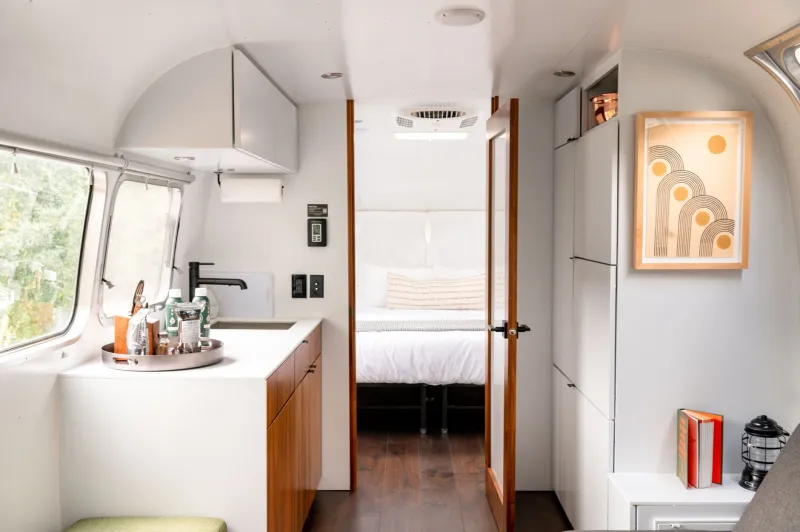
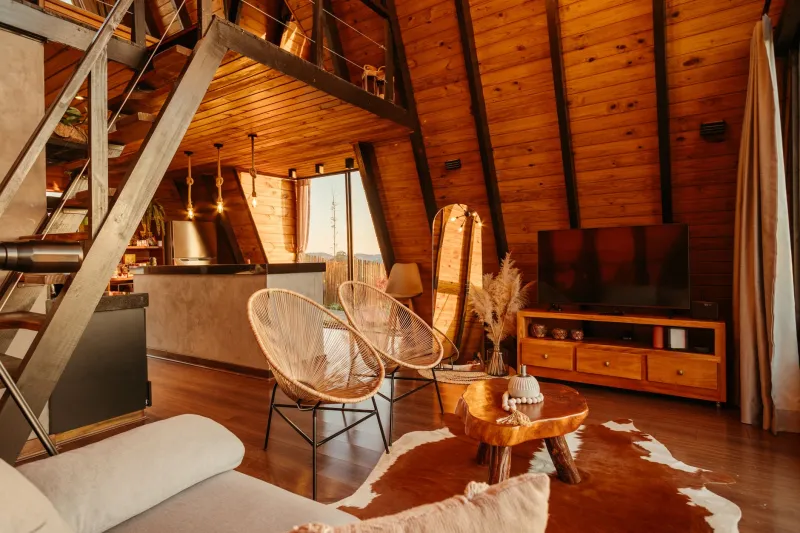
Compact lodges and glamping pods ask a lot of their interiors. In one footprint you need somewhere to sleep, somewhere to sit, somewhere to eat and somewhere to cook — often with a shower room tucked in at the side and a view trying to steal the show through the glazing. The trick is not to cram in four rooms' worth of furniture. It is to choose pieces that change job during the day, then get out of the way.
This is a guide for UK owners who want a one-room lodge to feel generous rather than cramped, practical rather than staged. It is about clear walkways, sensible ventilation and the small details that make a guest's first five minutes feel easy.
Start with the arrival moment
Before you think about sofa styles, stand at the door and imagine arriving with a suitcase, a cool bag and a wet coat. Where does everything go? If the answer is 'on the bed' or 'on the floor', the room is already working against you.
A compact pod needs a landing zone. That might be a slim bench with shoe storage underneath, a row of sturdy hooks at shoulder height and a shallow tray for boots. In a true single-room layout, the entrance often doubles as the kitchen edge, so keep the first metre inside the door as clear as possible. Guests should be able to step in, shut the door and dump their bags without sidestepping a dining table.
Think about lighting here too. A single ceiling light makes a small room feel flat and institutional. A wall light or a small lamp near the entrance softens the arrival and helps guests find the switch when they come back after dark.
Choose furniture that changes job, not just looks
The best small-space furniture is not simply smaller furniture. It is furniture with more than one role. A sofa bed is the obvious example, but only if it is a good one. A cheap sofa bed that is uncomfortable to sit on and worse to sleep on will annoy guests twice over. If the room is primarily a couple's retreat, a proper sofa bed with a decent mattress topper can work well. If it sleeps four, consider whether a fixed bed plus a compact sofa is actually more honest than trying to make one piece do everything.
Folding tables are another useful ally. A wall-mounted drop-leaf table gives you a proper eating surface when needed and folds flat when not. Nesting stools tuck under a counter. A slim console can become a dressing table, a laptop perch or a serving spot. The aim is to avoid pieces that only do one thing and then sit there taking up floor space for the rest of the day.
The bed by day
In a one-room lodge, the bed is usually the biggest object and the biggest planning decision. A bed-by-day layout works when the bed can be pushed to one side, dressed as a daybed or folded away entirely. Ottoman beds with storage underneath are popular because they combine sleeping space with luggage space, but check the lift mechanism and the depth of the mattress. Guests should not have to wrestle the bed to find a spare blanket.
Wall beds and Murphy-style beds are worth considering where the wall space allows, but they need proper fixing and a clear zone to fold down into. A wall bed that opens onto a walkway is a hazard, not a clever solution. Measure the swing and the standing room before you buy. Daybeds with drawers can be a good middle ground: they feel like a sofa in the afternoon and a bed at night, and they do not require a daily ritual of moving furniture.
Cooking and eating in the same square
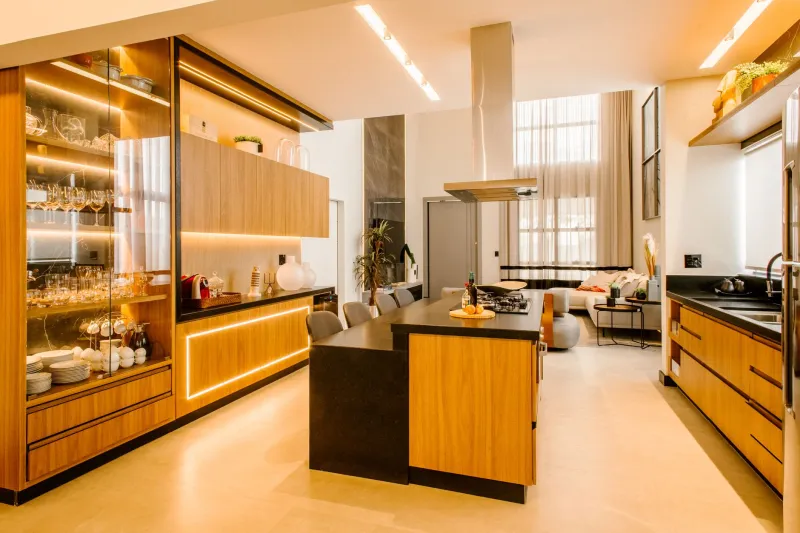
A compact lodge kitchen often sits along one wall, with the dining table trying to fit into the remaining space. The temptation is to buy the smallest table you can find. The better move is to buy a table that can be made small. A drop-leaf or gateleg table gives you full size for breakfast and folds down when the room needs to breathe.
Keep the cooking zone separate from the sleeping zone in spirit, even if there is no wall between them. A wipeable splashback, a good extractor and a clear worktop help more than decorative clutter. Ventilation matters in a one-room pod, especially in winter when windows stay shut. Make sure the extractor is actually ducted or recirculating properly, and leave a window or vent that guests can reach without moving furniture.
Storage that climbs, not spreads
In a single room, storage should go up the wall rather than out into the floor. Tall, slim shelving, a narrow tallboy and a bank of hooks will usually serve you better than a deep sideboard. Use the space under the bed for out-of-season bedding or spare pillows, but keep it labelled and easy to access. Guests should not have to unpack a puzzle to find a towel.
Open storage can make a small room feel busier, so mix open shelves with closed cupboards. A few baskets on a shelf are fine for hats, gloves and torches. A pile of visible paperwork is not. If the lodge is a holiday let, leave clear instructions about where things live. A labelled drawer or a simple shelf map saves guests from rummaging.
Keep the centre clear
Walkways are the unsung hero of compact lodge design. Aim for a clear route from the door to the bed, the kitchen and the bathroom. As a rough guide, 60–70cm of clear floor is a sensible minimum for a main path, and more is better where guests will carry bags or hot drinks. Mark out the route with tape before you commit to furniture. It is easier to move a table on paper than on a rainy Friday changeover.
Rugs can help define zones, but in a tiny room they can also trip people up or bunch under folding furniture. Choose a low-pile rug with a non-slip backing, or use a runner rather than a full-floor rug. Keep the floor around the sofa bed and the kitchen clear so nothing has to be moved every time someone wants to sit down.
Ventilation, damp and the British weather
One-room lodges are prone to condensation because cooking, showering and sleeping all happen in the same small volume of air. Furniture placed tight against cold external walls can trap moisture. Leave a small gap behind wardrobes and beds where you can, and avoid blocking radiators or air bricks. Breathable natural fabrics and wipeable finishes both have their place, but the real fix is airflow. A background vent, a trickle window and an extractor fan that guests actually understand will do more than any miracle material.
A quick buying checklist
Before you order, ask: does this piece do at least two jobs? Can I move it easily? Does it block a walkway or a window? Is there somewhere for a suitcase, a wet coat and a pair of boots? Can the room be ventilated without shifting furniture? If the answer to those questions is yes, you are probably on the right track.
A one-room lodge does not have to feel like a game of Tetris. With a few folding, stacking and storing pieces, a clear path through the middle and a sensible place for arrival clutter, it can feel calm, roomy and ready for guests — whatever the weather is doing outside.