Roll With It: Castors, Glides and the Lodge Room That Multitasks
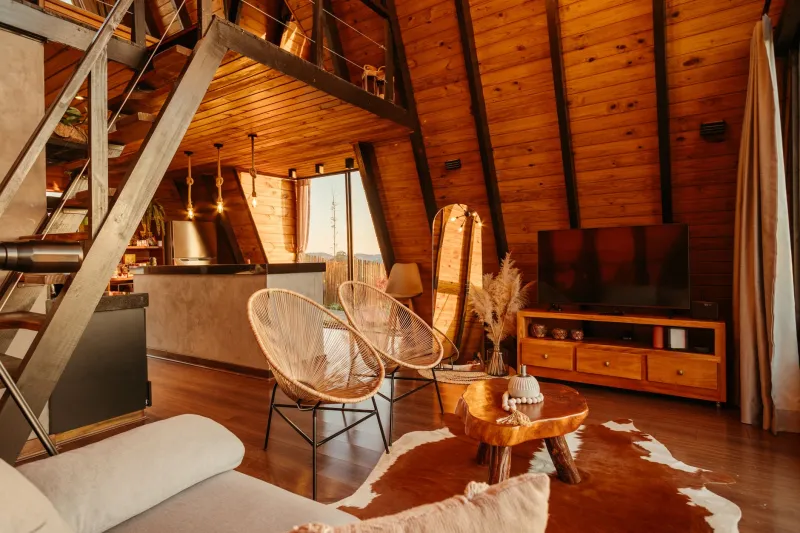
Every compact lodge has one room that is asked to do too much. On a wet Tuesday it is a lounge with a soggy coat draped over the back of a chair. By Friday evening it is a games room, with someone hunting for a missing dice under the sofa. By Sunday lunch it needs to become an extra dining space without anyone having to perform a full furniture reshuffle. That is where wheels, castors and glides start to look less like a hardware detail and more like a practical design decision.
The trick is knowing which pieces deserve to move and which should stay exactly where they are. A room that changes its mind needs furniture that can change with it, but not so much movement that guests feel they are sitting in a showroom on wheels.
Why a little movement goes a long way
In a small lodge, floor space is rarely the problem on its own. The problem is that the same square metre is needed for different jobs at different times. A coffee table that can be pushed to one side opens up a floor for a board game. A pair of side tables on castors can become a drinks station when friends arrive. A slim console on glides can slide out of the way when the sofa bed is needed.
This is not about turning the whole room into a mobile kit. It is about giving two or three key pieces the ability to move without a guest having to drag them across a floor and risk a scratch. In a holiday let, that matters even more. Guests will move things anyway. The question is whether the furniture is built to cope with that instinct.
The pieces that genuinely earn their wheels
Low coffee tables are the obvious candidate. Look for a table with four braked castors rather than two fixed wheels at one end, because a table that only rolls in a straight line is more nuisance than help. A lightweight rectangular or oval table on soft rubber wheels can be shifted with one hand and tucked against a wall when the room needs a clear centre.
Side tables and small occasional tables also work well on castors, especially if they are light enough to lift with one hand but sturdy enough not to skitter when someone puts a mug down. A nest of tables is useful, but a single side table on locking wheels is often more practical because it can be moved to the sofa, the chair or the dining table as needed.
Ottomans and upholstered footstools are another good fit. A storage ottoman on castors can hold throws, games or spare bedding, then slide out of the way when the room needs to breathe. Choose one with a firm lid and a reasonable weight, not a soft pouffe that tips when someone uses it as a seat.
For dining, a folding or drop-leaf table on castors can be a smart choice in a lodge where the main table seats four but a family of six turns up at half-term. The key is to check the locking mechanism. A table that folds out and then rolls away mid-meal is not a feature. It is a complaint waiting to happen.
Small storage trolleys and slim console tables can also work, but they need to be judged on their load. A trolley carrying books, board games and a lamp is a different proposition from a trolley carrying a tray of drinks. Check the castor rating rather than the furniture description alone.
What should stay put
Not everything benefits from wheels. Tall bookcases, heavy dressers, wardrobes and anything that a guest might lean on or pull themselves up with should stay fixed. A tall unit on castors can feel unstable even when the brakes are on, and in a holiday let that is a risk not worth taking.
Sofas and armchairs are usually better left on glides or fixed feet unless they are specifically designed as modular pieces with proper locking castors. A sofa that slides when someone sits down is unsettling. A sofa that slides when a child runs into it is worse.
Dining chairs are another grey area. Castors on dining chairs can be useful in a care setting or a home office, but in a lodge they often become a trip hazard and a cleaning nuisance. Fixed legs with felt glides are usually the better compromise.
The hardware bit: castors, glides and brakes
A castor is not just a wheel. The important details are the wheel material, the fitting and the brake. Soft rubber or polyurethane wheels are kinder to hard floors and quieter than hard plastic. Twin-wheel castors spread the load and tend to run more smoothly, but they also collect hair and fluff more readily, so they need checking at changeover.
Look for castors with a proper locking brake, not just a friction clip. A braked castor should hold the furniture still when someone leans on it. If the furniture is likely to be moved often, a swivel castor with a total-lock brake is the most useful type because it stops both the wheel and the swivel action.
Glides are the quieter option. Felt glides protect wood and vinyl floors and are ideal for pieces that move occasionally rather than daily. They need replacing when they wear down, and they should not be used on deep-pile rugs unless you want the furniture to dig in and refuse to budge. Plastic glides are harder-wearing but can scratch if grit gets underneath.
Floors first: wood, vinyl and rugs
Most UK lodges have either engineered wood, laminate, luxury vinyl tile or a mixture of hard floor and rug. Castors and glides need to suit that mix. Hard plastic wheels on a wood floor will eventually leave marks, especially if grit is trapped underneath. Soft rubber wheels are better, but they can leave black marks on some light vinyl if they are dragged rather than rolled.
Castor cups or protective pads under static feet are a simple safeguard. For pieces that move, a thin rug or runner in the traffic path can help, but it can also create a lip that castors catch on. If the room has a threshold strip between floor types, check that the wheels can cross it without jamming.
In a holiday let, floors take a beating. Mud, sand, dog hair and spilt drinks all find their way under furniture. A castor that rolls well on day one can become a stiff, scratchy nuisance by half-term. That is why removable, replaceable castors are worth looking for. If a wheel seizes, you want to swap it rather than replace the whole table.
A holiday-let reality check
Guests will not read a note about how to move the furniture. They will push, pull and prop things where they need them. That means the moving pieces should be obvious and easy to use. A coffee table with four visible brakes is better than a clever mechanism hidden underneath. A side table that is light enough to lift is better than one that needs two people and a diagram.
Housekeeping also has a say. Castors collect hair, crumbs and cobwebs. Smooth wheels with few crevices are easier to clean than ornate metal castors with lots of small parts. If the furniture is moved for cleaning, make sure the wheels do not mark the skirting or catch on the edge of a rug.
And think about weight. A castor rated for 30kg on a smooth warehouse floor may behave very differently on a lodge floor with a rug and a threshold. Add up the furniture weight plus what guests will put on it, then leave a margin. A cheap castor that fails under a loaded games table is a false economy.
A short buying checklist
Before you buy, ask: does this piece actually need to move, or would a lighter fixed piece do the same job? If it needs to move, does it have at least two locking castors, ideally four? Are the wheels soft enough for the floor and strong enough for the load? Can the castors be replaced? Does the furniture still feel stable when the brakes are on? And will a guest understand how to use it without instructions?
The best moving furniture in a small lodge is not the stuff that rolls at the slightest touch. It is the stuff that stays put when you want it to, moves when you need it to, and does not leave a trail of scratches behind it. Get that balance right and the room can change its mind as often as the weather does.